

Influencer
Comparison
Tool
Compare two influencers on TikTok, YouTube or Instagram
Limit of 10 free reports per user
Want to see more of these influencers stats?
Check out their stats by completing this form:
Want instant creator insights while browsing Instagram, TikTok, and YouTube?
Download our free influencer marketing Web Extension.

Manage all your influencer marketing relationships in one place.
Types of Creators
The simplest and most popular way to categorize creator types is by comparing follower counts. By defining each creator type – along with their strengths and weaknesses – you’ll know how to refine your recruiting efforts.
Nano influencer
Nano influencers are creators who manage online communities of 1,000 to 10,000 followers.
A thousand followers is typically the threshold at which a social media creator may call him/herself an influencer. Some nano influencers are on their way to becoming micro or macro influencers, while many remain within this category due to the fact that their content is unusually specific.
Nano influencers enjoy smaller audiences compared to their peers in other categories. As such, these creators usually enjoy deeper connections with a larger percentage of their audience. Among their strengths are driving sales, ongoing user-generated content, and general conversions.
While nano influencers will certainly increase brand awareness among their followers, you’re not likely to gain significant brand awareness due to the limited size of a nano influencer’s audience.
Micro influencer
Micro influencers are creators who manage online communities of 10,000 to 100,000 followers.
According to most experienced influencer marketers, micro influencers are the “sweet spot” of brand-creator partnerships. They have a large enough audience to publicize brands well, but their community is small enough to still maintain relationships with a decent percentage of their followers.
As such, micro influencers are great at converting customers, answering product questions, driving website traffic, and more.
Macro influencer
Macro influencers are creators who manage online communities of 100,000 to 1,000,000 followers.
Most creator relationship managers approach macro influencers differently than they do creators with smaller audiences. That’s because once a social creator reaches more than 100,000 followers, they’re most likely famous within their industry.
Macro influencers can create significant brand awareness due to their sizable following. As such, many brands use these creators to help them launch new products, test them, or give online shoutouts for sales or events.
It’s not unusual for macro influencers to have lower engagement rates than micro and nano influencers. But that doesn’t mean that they haven’t nurtured meaningful relationships with their followers – just that they manage more of them, and it’s not as easy to engage all or most of them.
Celebrity Influencer (Mega influencer)
Celebrity or mega influencers are creators who manage online communities of 1 million or more followers.
Once a creator has more than one million followers, they are considered celebrity or mega influencers. These creators are often professional athletes, performers, or industry thought leaders.
When a celebrity mentions your brand, everyone will hear about it. In a campaign with one of these creators, you can go from completely unknown to well-known pretty quickly. However, these creators are expensive.
Furthermore, celebrity creators may not drive the kind of conversions you need if that is your main marketing objective. But for getting the word out, celebrity influencers will produce incredible results.
How to Compare Creators
Knowing influencer categories is the first step to comparing creators. But just because a creator falls within the same category doesn’t mean that they perform as well as their peers. Here are three ways to compare creators:
- Follower count
- Engagement rate
- Earned media value
Follower Count
The simplest metric to compare one creator to another is by follower count. The categories above do this automatically.
However, even within a single influencer category, there is a range of followers. For example, some micro influencers only serve 15,000 followers, while others maintain audiences of 80,000. Among macro influencers, the range is even more dramatic with some macro influencers managing 150,000 followers and another 800,000 followers.
Noting these follower count differences within each category can help you forecast the impact of your influencer marketing campaign.
Engagement Rate
Arguably the most important creator metric today is engagement rate. An engagement occurs when a follower interacts with an creator post. These interactions include post likes, comments, shares, and any other social platform-specific engagement feature.
“Engagement metrics do not guarantee influencer results, but they can signal the value of that influencer’s social influence. These metrics also signal influencer authenticity, both of which typically contribute to high conversion rates during influencer campaigns.” – How to Measure Social Influence
In general, it’s best to calculate engagement based on comments and shares over post likes. When examining a prospective creator closely, you should take a look at the quality of engagement. Fake influencers will attempt to buy likes for their account and posts to give the wrong impression. But if you take a look at the comments, you’ll know pretty quickly whether or not that creator has a real connection with their audience.
Earned Media Value
Earned media value (EMV) tells you what your – or in this case, a creator’s online presence is worth within your industry. This metric takes into account every third-party mention or engagement, such as user-generated content, organic growth, and publicity.
“The basis for EMV lies in understanding what effect a brand’s marketing decisions and public image have on their prospects. Rather than spend a ‘dollar to get a dollar,’ mature marketers want to spend a dollar to set off a chain reaction of positive buyer feedback.” – Quick Guide to Earned Media Value & Influencer Media Value
In most cases, marketers use EMV to establish the value of their own brand across their various owned media channels. But in the case of influencer marketing, marketers try to establish the EMV of prospective creators, or influencer media value (IMV).
“In short, IMV should demonstrate a comparable ROI to paid media. For example, an IMV of $100 indicates that your influencer marketing results generated what you could expect to achieve by spending $100 on digital ads. If you spent less than $100 on that particular influencer campaign, then you’ve achieved a positive ROI and better results than if you had spent those dollars on ads.” – Quick Guide to Earned Media Value & Influencer Media Value
When applied to creators, EMV can help your brand understand two things:
- 1. It can show you the conversion impact of a certain number of impressions from a creator post. The lower the number of impressions per conversion, the greater that creator’s EMV.
- 2. It can shed more light on the quality of a creator’s engagements. For example, post comments generally hold more value than do post likes.
How to Use Influencer Analysis Stats to Select a Creator
Our free comparison tool above provides estimates of how well two creators are likely to perform. You can examine follower counts, engagement rates, and EMV side-by-side to help you plan your influencer marketing budget and launch your recruiting efforts.
Many brands set baseline parameters for their creator team. For example, creators must have a minimum engagement rate and number of followers.
But after you establish those parameters, it’s still important to take a close look at the creator you’re interested in. Each creator has their own style and set of values. You want to be a good match with this creator, ensuring that there is audience alignment and brand compatibility.
Conclusion: Use this tool to compare your top creator prospects and find the right creator for your campaigns.
If you’re new to influencer marketing or trying to improve your existing program, our free comparison tool will help you narrow your focus and define your goals. Regardless of what tools you use, it’s critical that you track your influencer campaigns carefully.
Tracking creator performance will show you the best creators for your brand, as well as which types of content will connect well with your audience. Using the comparison tool above can show you which metrics and qualities regularly translate into positive creator ROI.
Get The Power of Influence: 2025 Guide to the Creator-Driven Buyer Journey
More Influencer Tools
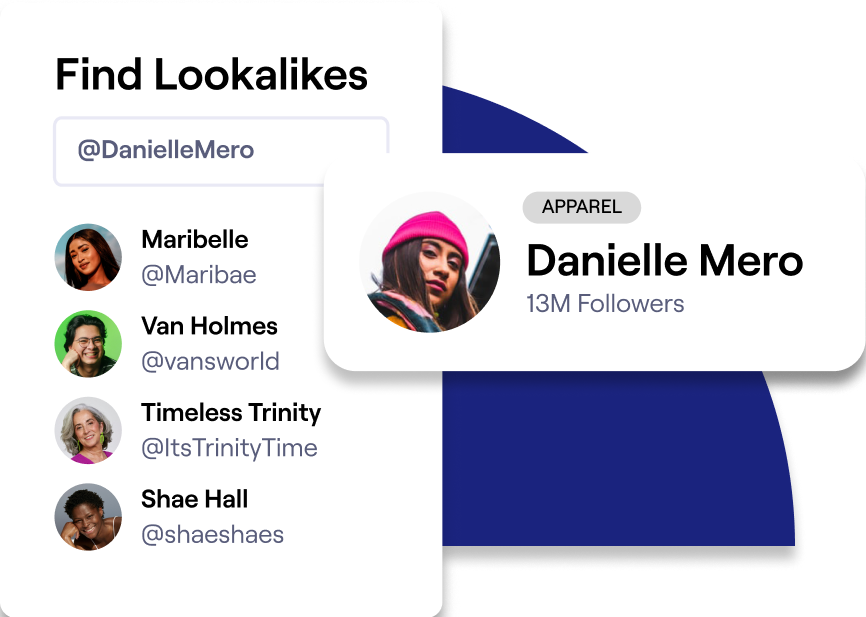
Influencer Lookalike Tool

Engagement Rate Calculator
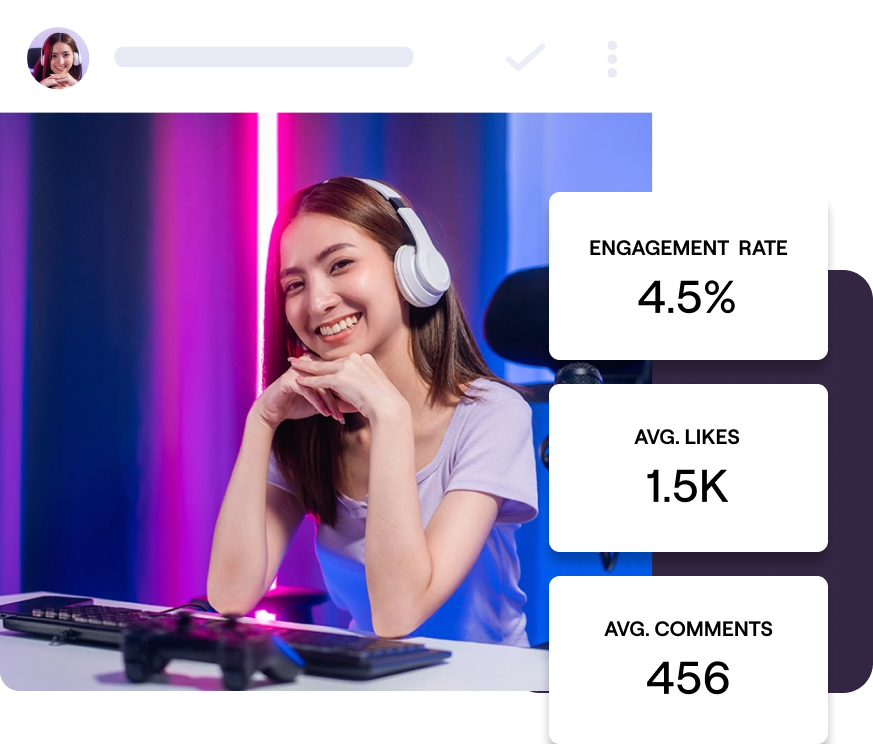
Influencer Analysis Tool
More Influencer Marketing Resources


Instagram results are temporarily limited while we upgrade this tool.
This free tool checks whether a creator’s followers are real. Gia can also tell you whether they have ever driven a sale. Try Gia free.
That lookup didn’t go through. It may be a temporary issue on our side or a mistyped username. Please try again in a minute.
This free tool checks whether a creator’s followers are real. Gia can also tell you whether they have ever driven a sale. Try Gia free.
Sorry, it looks like you’ve reached your limit on this tool.
This free tool checks whether a creator’s followers are real. Gia can also tell you whether they have ever driven a sale. Try Gia free.
Results aren’t available for that creator in the free tool at this time. You may try another username or see what Gia can tell you about them.
Sorry, it looks like you reached your download limit.
This free tool checks whether a creator’s followers are real. Gia can also tell you whether they have ever driven a sale. Try Gia free.